Medical Waste Detection
.png)
Descripion
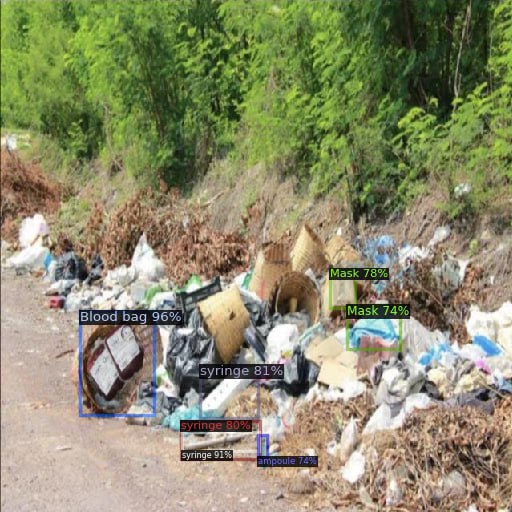
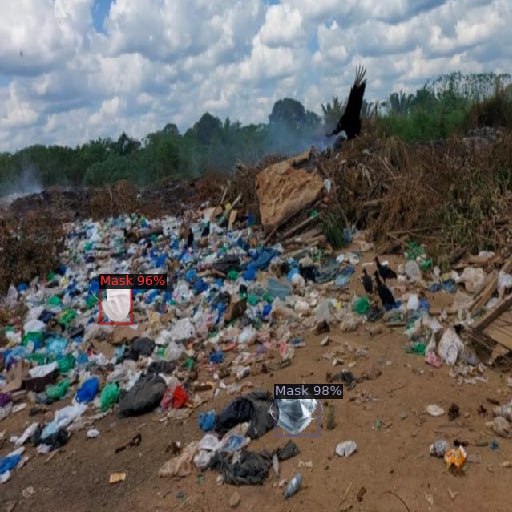
The Medical Waste Detection project, developed using Detectron 2, focuses on leveraging advanced computer vision techniques to identify and manage hazardous medical waste. This project highlights the critical importance of accurate waste detection to protect public health, safeguard the environment, and optimize resource use. The methodology includes data collection, preprocessing, model training, and evaluation, all aimed at achieving high-precision detection of medical waste items.
Tech Stack
Detectron2
My Role
Data Collection and Preparation
To kick off the project, a diverse and extensive collection of medical waste images was assembled from multiple sources, ensuring a robust dataset that captures a wide range of waste types and scenarios. This comprehensive dataset included various forms of hazardous materials, such as syringes, gloves, and other medical disposables. Each image was meticulously annotated with precise labels, highlighting key hazardous items and facilitating accurate training of the detection model.
Model Training and Fine-Tuning
Employing Detectron 2's state-of-the-art Faster R-CNN architecture, I undertook the training of the model on the carefully curated dataset. The training process was aimed at achieving a detection accuracy exceeding 94%. This involved the meticulous configuration of hyperparameters, application of data augmentation techniques to enhance model robustness, and adherence to best practices in training to ensure optimal model performance. Key considerations included tuning learning rates, adjusting batch sizes, and implementing advanced regularization techniques to mitigate overfitting.
Evaluation and Results
The trained model was rigorously evaluated using a suite of standard object detection metrics, including precision, recall, and overall accuracy. Detailed analysis of the evaluation results was conducted to pinpoint areas for potential improvement. This process ensured that the model not only met but exceeded the project's objectives for effective medical waste detection, providing reliable and actionable insights for waste management practices.
Deployment and Impact
Following successful training and evaluation, the final model was deployed to enable real-time detection of medical waste. This deployment facilitated automated identification and management of hazardous materials, significantly enhancing safety protocols for healthcare workers. Additionally, the deployment contributed to better environmental protection by ensuring that medical waste is managed properly, and promoted resource conservation by optimizing waste handling processes. The impact of this project extends to improved public health and environmental sustainability, demonstrating the practical benefits of advanced computer vision technologies in critical applications.